November 6, 2026
Preventing falls is an important part of helping older adults maintain their safety, confidence, and independence. While falls can happen for many reasons, simple changes to everyday routines and living spaces can help reduce common risks. Understanding potential hazards, knowing when to ask for assistance, and working together can make a meaningful difference.
At The Wellington Senior Living, I believe fall prevention starts with recognizing the everyday situations that can put residents at risk. Sometimes, the biggest hazards are not loose rugs or slippery floors, but something as familiar as getting in and out of bed.
As Wellness Director, I encourage residents, families, and team members to pay attention to these challenges and make adjustments that support safer movement and independence.
One of the most common fall hazards we see in residents’ apartments is clutter.
Belongings left in walking paths can create obstacles, particularly for residents who use walkers or other mobility devices.
I encourage residents and families to keep floors clear and make sure there is enough space to move comfortably between furniture.
However, another important concern we have encountered is beds that are too high for residents.
A bed may look comfortable and seem like the right fit for an apartment, but its height can create difficulties when someone tries to get in or out.
If a resident cannot safely sit on the edge of the mattress or place their feet securely on the floor, transferring in and out of bed may become more challenging.
At The Wellington, we have seen residents experience falls while attempting to navigate beds that are too tall for them.
I encourage families to consider whether a loved one’s bed is an appropriate height for their abilities.
Sometimes, adjusting the mattress or bed frame may help. In other situations, replacing the bed with one that better accommodates the resident’s needs may be necessary.
These decisions should involve the care or therapy team when additional guidance is needed.
The goal is to make sure residents can complete everyday movements as safely and comfortably as possible.
Families and team members can also help by checking that frequently used belongings are within easy reach.
Items such as phones, glasses, call lights, and other essentials should be accessible without requiring residents to stretch, bend, or get up unnecessarily.
These small adjustments can make an important difference in reducing fall risks.
Along with creating a safer apartment, I believe residents can reduce their risk of falling by being thoughtful about how they move throughout the day.
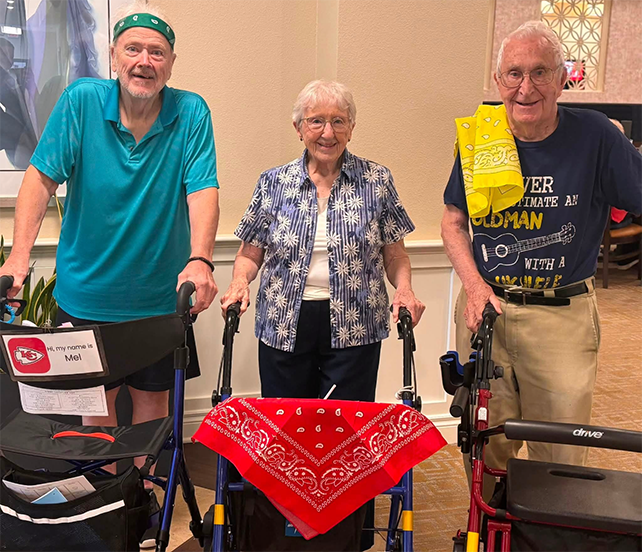
One important habit is using recommended walkers consistently.
Even when moving only a short distance across an apartment, residents should have their walker nearby and use it as directed by their care or therapy team.
Taking slow, intentional steps is equally important.
Rushing can make it easier to lose balance or overlook an obstacle. I encourage residents to take their time, make sure they feel steady, and pay attention to their surroundings before moving.
Families and team members can reinforce these habits through regular check-ins.
For example, checking whether a resident has everything they need nearby can reduce unnecessary trips across the apartment.
If a resident needs to use the bathroom and requires assistance, a team member can help rather than having the resident attempt the activity alone.
These check-ins also create opportunities to recognize changes in mobility or identify concerns that may need additional attention.
I encourage residents to think about whether an activity feels safe before attempting it.
If walking alone seems risky or bending over to pick something up from the floor feels difficult, that may be a sign to ask for assistance.
Recognizing those limitations is not about giving up independence. It is about preventing an injury that could make everyday activities more challenging.
If a resident begins feeling dizzy, weak, or unsteady, they should remain seated or sit down safely if possible.
They should use their call light to request assistance before attempting to stand or walk and report their symptoms to a team member.
Our Wellness team can evaluate the concern and determine whether additional medical follow-up is appropriate.
Sometimes, that may include coordinating an appointment with the resident’s primary care provider to review medications or consider testing that could help identify the cause of dizziness or weakness.
The important thing is to report these changes rather than attempting to push through them.
My simplest fall-prevention tip is to take slow, intentional steps and recognize when an activity may be too risky to complete alone.
If walking without assistance or bending to retrieve something from the floor feels unsafe, trust that feeling and ask for help.
Fall prevention is about making thoughtful decisions throughout the day. Keeping apartments free of clutter, ensuring beds are an appropriate height, using walkers, and requesting assistance can all make a meaningful difference.
At The Wellington Senior Living, our goal is to help residents feel safe, confident, and supported while maintaining the independence they value.
The Wellington Senior Living in Liberty, MO, offers independent senior apartments, assisted living, and memory care with a variety of services and a range of floor plan options. Amenities include restaurant dining, 24-hour bistro, concierge service, housekeeping, events and entertainment, personal care, transportation services, and more. Centrally located near Liberty Hospital with convenient access to major shopping centers and attractions, including Shoal Creek Golf Course, Liberty Commons, Historic Downtown Liberty, Stocksdale Park, Martha Lafite Thompson Nature Sanctuary, City of Liberty Art Walk, and National WWI Museum and Memorial.

The Wellington Senior Living serves and employs individuals of all faiths, regardless of race, color, gender, sexual orientation, national origin, age or handicap, except as limited by state and federal law.